

News
Exercises for every age
Howard Head Sports Medicine is known for being the best in helping people recover from an injury. But what you may not know is that they also specialize in injury prevention (not just rehabilitation) through exercise. In fact some of the world's best athletes train with Howard Head in hopes of avoiding the wear-and-tear injuries that sports often cause. We worked with Howard Head's Philip Galloway to learn what general injuries are common among age groups and what exercises can be done to combat those injuries and keep you active and healthy.
Click on the images below for a larger view.
20's
The 20s and younger are about feeling indestructible but you are still certainly at risk for injury from moving incorrectly during activity. By working on the positioning of your lower body while performing athletic moves you can reduce the likelihood of many common knee injuries.
WHAT TO DO
While at home or in the gym practicing correct form in squats double leg single leg or plyometric will improve your form and carry over into your sports. It's all about alignment: Keep the hips and knees aligned over your feet and keep your chest and shins parallel deep into the squat. For single leg squats keep the same form as double leg squats but you also need to keep your hips level as you lower into the squat. For plyometric squats maintain the same form again but you will have the added challenge of 2.5x the weight which your muscles will
have to control and still keep your body aligned.
30's
If you made it out of your 20s without any knee problems (or even if you didn't) it may be
time to start thinking about your back. The core strength you had leftover from your college
days is likely fading. By keeping yourself strong through your midsection you'll also decrease your chances of hurting your lower back.
WHAT TO DO
For a V sit with legs lifted sit on the ground with your feet elevated keeping your spine straight and hold the position for 10-15 seconds. For a flat plank prop up on your elbows and toes with your back straight. Fora side plank prop up on one elbow and the side of one foot keeping your body in a straight line. For increased difficulty add a leg lift or unstable surface such a ball. For bridge lie on your back digging your heels into the ground. Lift your hips until your body is in a
straight line. For increased difficulty
only use one leg and rotate legs.
40's
In your 40s your rotator cuffs will tear easier than they would have in your 20s and 30s. But
preparing your body to withstand that shoulder stress is as easy as picking up a theraband from a
sporting goods store and fastening it to a wall in your house.
WHAT TO DO
With your elbows flexed to 90 degrees rotate away from your body and then return to the start
position. Make this more effective by placing a rolled towel under your armpit to hold the form. For the shoulder internal rotation turn around and do the reverse of the previous exercise.
For added challenge take the rotation exercises above and add a 90-degree bend in your elbows.
Next try shoulder extensions using the theraband. Start with your arms out front thumbs pointing out and elbows locked. Pull the bands to your pocket area and squeeze shoulders back and down.
Keep in mind what your mother
always told you no slouching.
50's
Balance begins to deteriorate as you enter your 50s and 60s. The loss of balance can impact your fun and the likelihood that you'll stay on your feet when challenged by an icy patch. By practicing
balance exercisesyou can fight those forces of nature.
WHAT TO DO
Begin by focusing your gaze on a fixed point. Keep your eyes glued to that point and lift one leg.
Increase the difficulty by standing on something soft (like a pillow or towel) or an unstable surface.
Make this exercise more dynamic by balancing on one foot and reaching as far to the front back left and back right as possible. Repeat on the other leg.
____________
Howard Head Sports Medicine has nine convenient locations to serve you in Avon Beaver Creek Eagle Edwards Frisco Gypsum Silverthorne and Vail. Contact them at (970) 476-1225.
More News
-
More
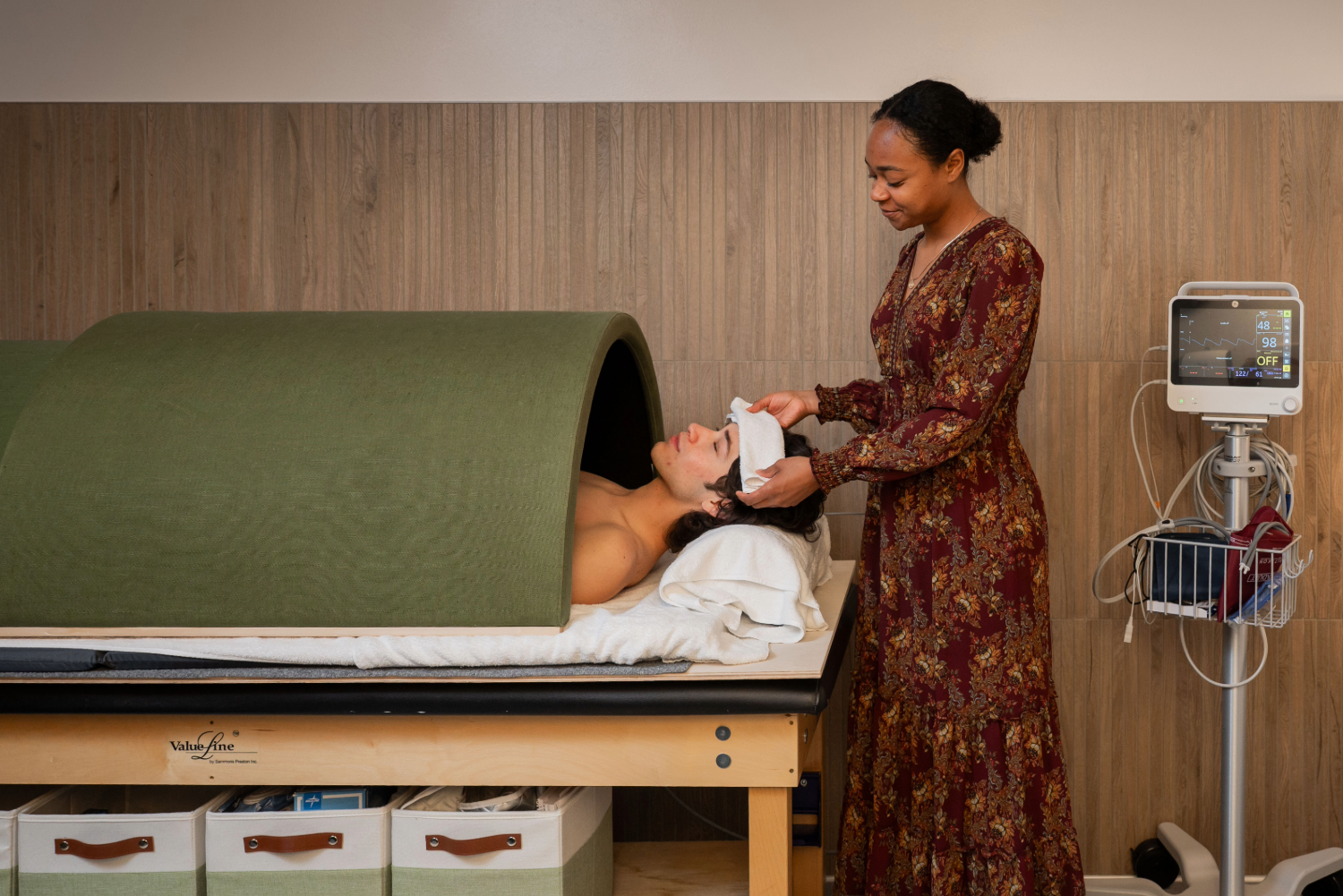
Hot, Cold and Mental Health: Inside Vail Health’s CHILL’D Research Study
Depression, a mental illness affecting more than 18% of American adults, has no blood marker or single biological cause. It looks and feels different in everyone because the brain is a complex organ, and there is no single way that depression develops. Like many mental health conditions, depression can be treated through medical, pharmaceutical and alternative approaches. One promising avenue under study at Vail Health’s Behavioral Health Innovation Center is contrast therapy — combining sauna and cold plunge treatments.
-
More

What to Expect Before, During and After a Colonoscopy
If you've been putting off a colonoscopy, you're not alone. It's one of the most recommended — and most avoided — preventive screenings in medicine. But here's what most people don't realize until after their first one: the procedure itself is a non-event. You're asleep. You don't feel a thing. What people actually dread, and what they talk about afterward, is the prep. The good news is that even the prep is manageable, and the payoff is enormous. Colorectal cancer is one of the most preventable cancers when caught early. A colonoscopy doesn't just detect it; in many cases, it stops cancer before it starts.
-
More
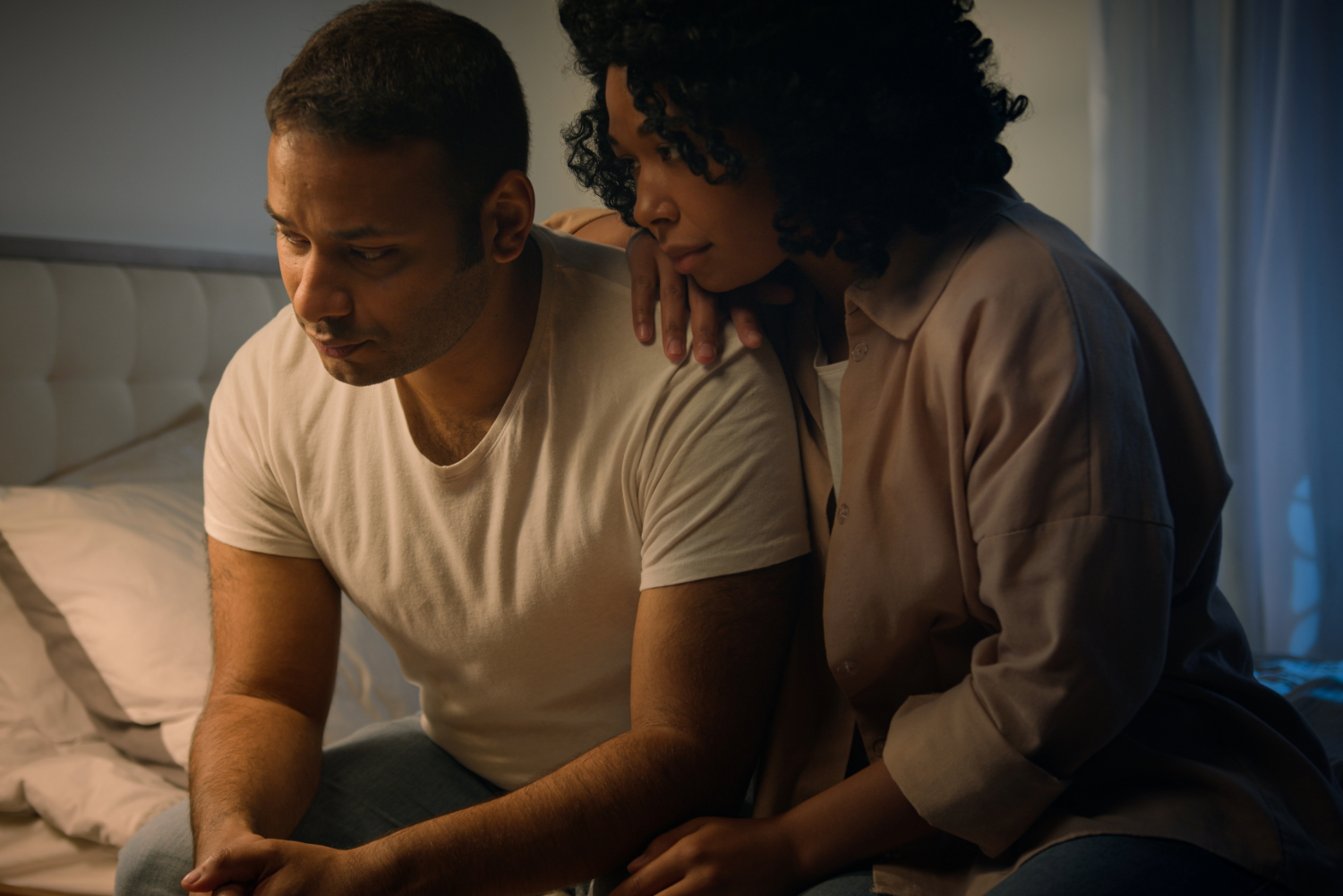
Navigating Men’s Sexual Health: Erectile Dysfunction and the Bigger Picture
For something so common — and treatable — erectile dysfunction (ED) is still surprisingly difficult to talk about. “The biggest misconception men have is that there’s a mechanical or physical problem with them, and that’s usually not the case,” explains Dr. Joseph Dall’Era, a urologist at Vail Health. In reality, ED is far more nuanced and manageable than people realize. Understanding what’s happening and knowing when to speak up can shift the experience.